
Today we want to touch base up on a topic which is not talked about too often. We usually talk about how we want to make the menstrual products available to everyone, especially school age girls. How making it available to everyone helps them to overcome some obstacles that keep them from attending school sports or social activities.
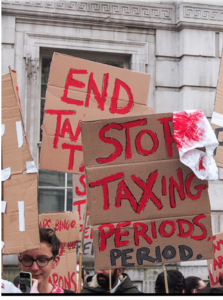
But today we want to discuss a little bit with you about Taxes on menstrual products and make a case about why they should be reduced or removed. The idea is to raise awareness of factors which affect the affordability of menstrual products.
We want to keep this talk very simple for everyone. but the idea is just to raise awareness about it. We are not economic or taxation experts but this is a simple enough concept for everyone to understand.
We want to discuss a little bit with you about taxes on menstrual products and make a case about why they should be reduced or removed.
What is Period tax Or tampon Tax?
These terms are used to describe all types of taxes on all types of menstrual products, not just tampons. Depending on a country’s tax system, this could be Valued-added tax (VAT) Goods and service tax (GST sales tax) and import tax.
By the way, there’s no special tax for menstrual products, they fall under the common tax rates.
Why is it important to scrap taxes on menstrual products?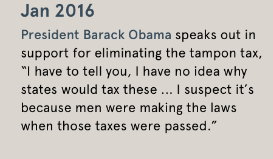
1) Menstrual products are basic necessities.
2) Period taxes are discriminatory.
3) Menstrual products should be affordable for everyone.
4) Ending period stigma.
Period Tax maps: Global overview of taxes and campaigns
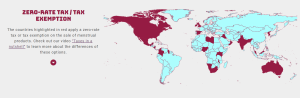
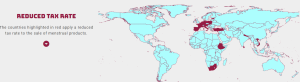
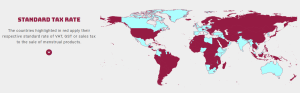
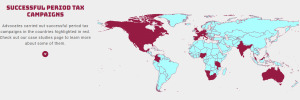
Courtesy: https://periodtax.org/map.html#mapslider
Does reducing or removing tax on menstrual products impact the actual costs of the product?
- The type of tax reduction matters. Depending on your country’s tax system, the government can choose to either reduce, zero rate, or tax exempt them. If a tax exemption applies, the raw materials are still subject to tax. And producers would seek to cover these extra costs and thus the prices are less likely to drop. This was the case in India for local manufacturers.
- Accountability matters After taxes are lowered, retailers might simply take the opportunity to increase their profit. When the government, existing consumer authorities and the public puts pressure on companies, retailers, or shops to apply the tax change, evidence suggests that there’s a higher compliance.
Will eliminating tax make the products affordable? Not really!
Taxes account for only a small fraction of the entire price. So even if these 5% to 15% taxes are removed, the product still might not be affordable for very poor people.
So what else should be done ?
- Additional policies could be required to ensure that everyone has access to good menstrual products. This could be product distribution schemes, vouchers, or creating market incentives for making cheaper products.
- Lots of competition forces retailers to offer the lowest possible price. And therefore tax changes, mostly result in cheaper prices too.
- In a monopoly however, where only one company offers a certain product or service-for example, a remote village, which receives menstrual products by only one retailer. There’s a high likelihood, that the tax difference is kept by them as profit.
Positive things are happening:
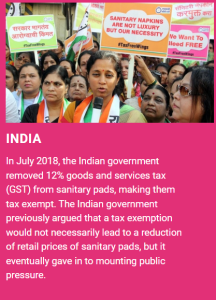
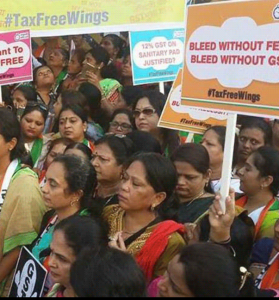
All tax campaigns on period taxes have triggered a society movement to address period stigma and period poverty and resulted in higher political commitment too. This can be illustrated by Nigeria and India who both included now menstrual products as basic necessities in their COVID-19 relief packages. This widespread political momentum is the best news to enable general policy change on menstrual health and hygiene.
 .
.
Good news:
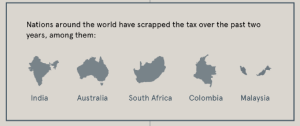
In more and more countries, activists, individuals, and organizations are raising their voices to demand the reduction or elimination of the taxes on menstrual products, which many suggest are unfair. Governments around the world are also starting to listen and take action.
This saying is most apt in this situation: “Be the change you wish to see in the world”. So we encourage each one of you to be the voice of change and advocate for yourself and the ones who cannot who cannot speak for themselves.
Link to Youtube Channel: https://www.youtube.com/channel/UCN0cOHYJJy57nKDcwkq12kQ
Link to Podcast: https://podcasts.apple.com/us/podcast/girlhood-unfiltered/id1695611178
Link to Nishka’s Blog: https://nishkautpat.blog/
Link to Kaanchi’s Blog: https://kaanchiutpat.blog/
